
Snapshot
- Wellness resort design is an architectural approach that uses natural light and moving water, along with local materials and quiet layouts, to lower stress before any treatment begins.
- Villa Foresta near Stockholm and Arctic Bath in Swedish Lapland are the bathing-led picks in Sweden, with Roman-style baths inside a castle-like hotel at one and an open-air cold bath on a river at the other.
- Juvet Landscape Hotel in Norway and Post Ranch Inn in California both put rooms on stilts, from glass cubes above a river valley to Tree House rooms above redwood roots.
- Amangiri in Utah is the desert resort on the list, with canyon-colored concrete walls and open-air pavilions arranged around a sandstone formation.
- Euphoria Retreat in Greece is the Byzantine-inspired spa, with arched, domed spaces and a darkened Sphere Pool within walking distance of the old fortress town of Mystras.
- JOALI BEING in the Maldives is the island option, with floor-to-ceiling glass facing the Indian Ocean and dedicated halls for sound therapy and hydrotherapy.
Wellness resort design starts with the idea that the building itself should calm you down. From historic castle walls wrapped around Roman-style baths to isolated Scandinavian sanctuaries built for extreme climates, these seven resorts use intentional architecture to quiet the mind and wake up the senses.
Ever walk into a room and feel your shoulders drop? Soft daylight and moving water can do that, and so can a living wall or a sudden hush. The surroundings make a visceral difference.
That exact feeling drives modern wellness resort design. Architecture now has to work as hard as the spa menu. The best resorts shape their spaces to lower stress the moment you step inside. Daylight and water come indoors, and even the spa’s sound and textures are tuned to how you feel.
Of course, a beautiful building alone does not make a great wellness resort. Thoughtful design backed by a strong spa concept and solid programming changes how the whole stay lands.
What Makes Wellness Resort Design Work?
Good design serves a distinct purpose. Rather than treating a spa or gym as an afterthought, top resorts use specific elements to weave well-being directly into the physical structure.
- Nature moves indoors. Biophilic design ties a building to its landscape. Glass walls frame the view, and indoor water and local plantings blur the line between inside and out.
- Light and sound steer the mood. Daylight shifts through the hours to match your circadian rhythm, and acoustic design protects the silence. Some rooms add custom soundscapes to calm the nervous system.
- Materials ground the stay. Raw stone and local timber root a room in its setting. Clay and woven textiles add a warmth you can touch.
- Layout shapes how you move. Architects plan every transition, from a garden path that takes you out of a busy lobby and into a quiet thermal circuit to a trail that starts at your door and ends in the forest.
Seven Resorts Designed Around Wellness
From desert sanctuaries that melt into rock formations to immersive island oases, here are seven stunning wellness resorts leading the way in design.
1. Villa Foresta — Stockholm, Sweden
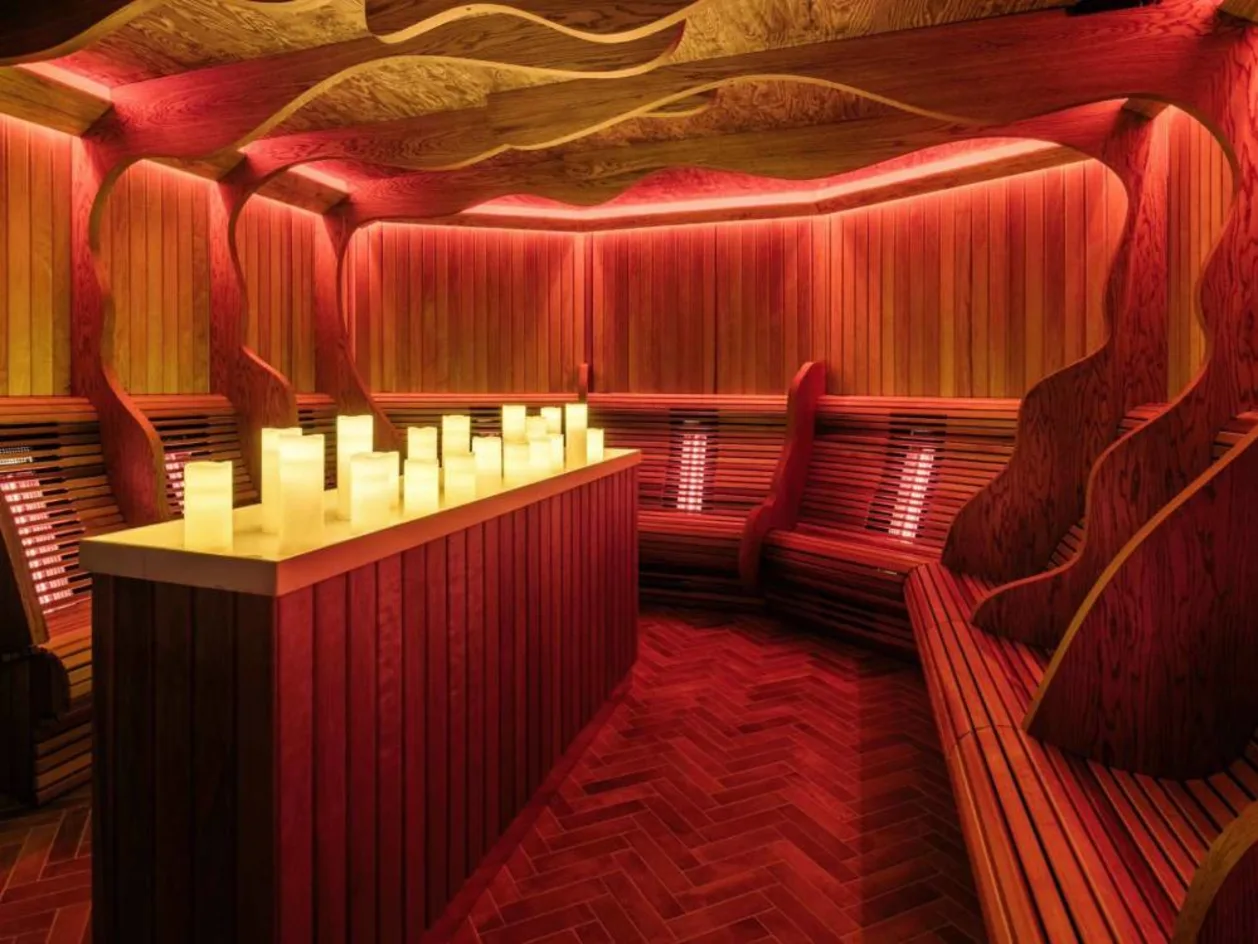
Roman baths inspired the Acqua di Foresta spa at Villa Foresta, with Gotland limestone and vaulted cellar ceilings, and soft Gregorian chants drift in the background. Pools and terraces face the open water from a cliff on Lidingö island, close to central Stockholm.
2. Arctic Bath — Harads, Sweden
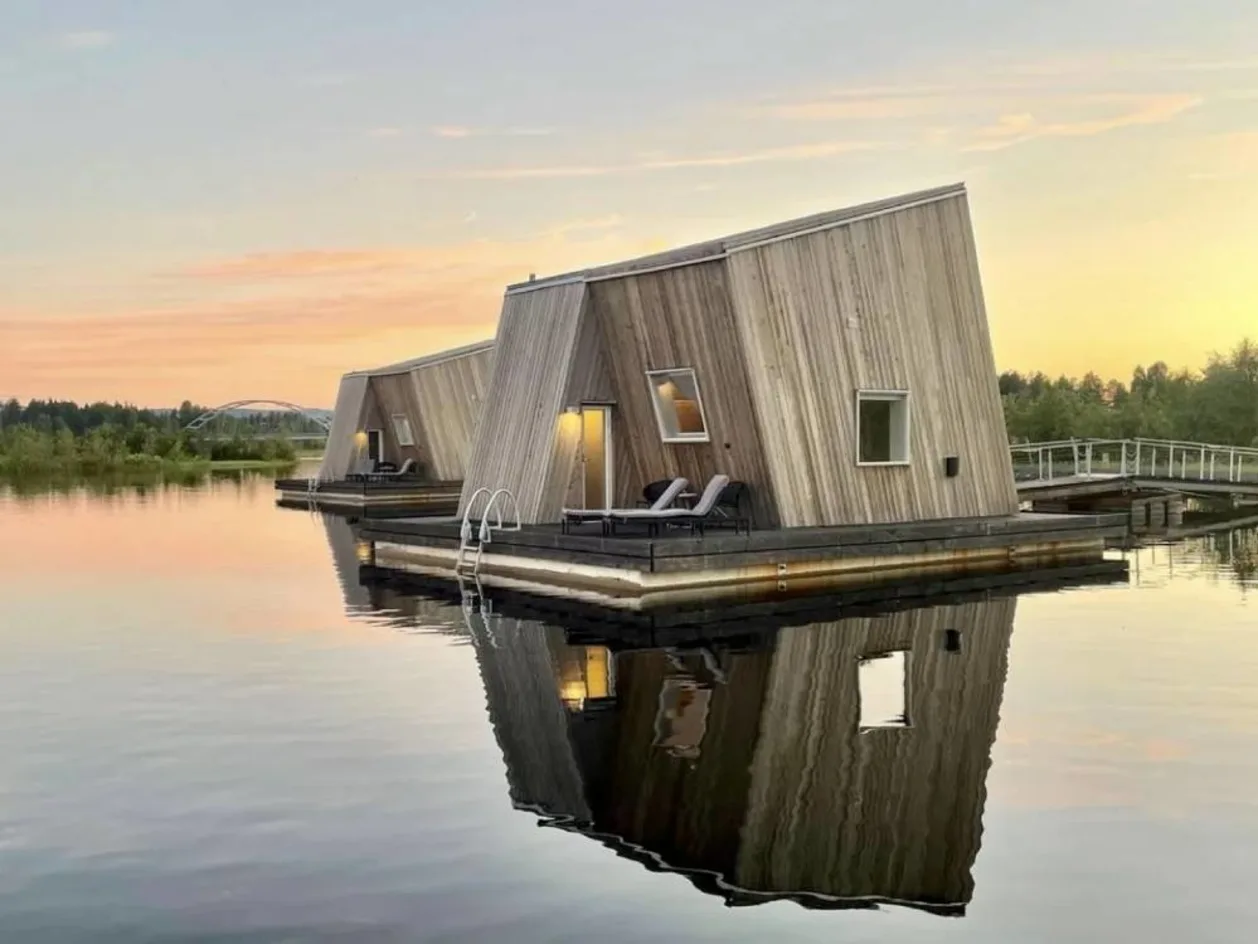
On the Lule River in Swedish Lapland, Arctic Bath floats in summer and freezes into the ice in winter. The circular building resembles a jam of timber logs, a nod to the river’s logging past. An open-air cold bath anchors the center, with saunas and hot baths around it.
3. Juvet Landscape Hotel — Valldal, Norway

Juvet’s seven rooms are glass-walled cubes raised on stilts among birch trees and boulders, which keeps the forest floor largely untouched. Dark, muted interiors keep attention on the river and the mossy rocks outside.
4. Amangiri — Canyon Point, Utah

Three architects designed Amangiri around Canyon Point. The concrete walls match the canyon’s colors, and the resort wraps around a Jurassic-era sandstone formation. Open-air pavilions and deep courtyards frame the desert in all directions.
5. Euphoria Retreat — Mystras, Greece
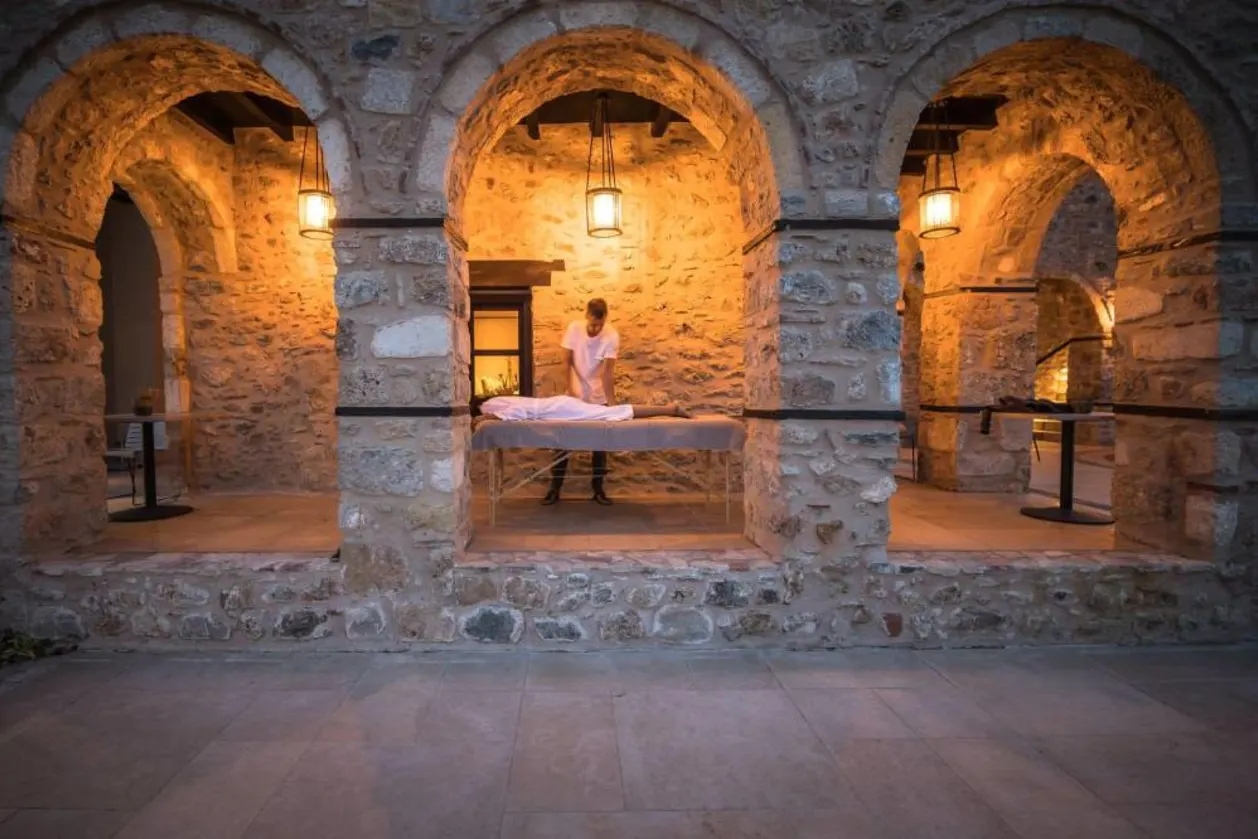
Byzantine architecture shapes the arches and domes at Euphoria Retreat, within walking distance of the old fortress town of Mystras. The Sphere Pool is a darkened dome evoking a womb-like embrace. The spa moves guests through warm and cool zones and quiet rooms.
6. JOALI BEING — Raa Atoll, Maldives

The villas at JOALI BEING boast floor-to-ceiling glass facing the Indian Ocean, and the island has kept its natural forest. Fluid lines and ocean-inspired color replace the usual wood-and-stone look. Two dedicated halls handle sound therapy and hydrotherapy.
7. Post Ranch Inn — Big Sur, California

Reclaimed wood and glass make up the buildings at Post Ranch Inn, on the Big Sur cliffs above the Pacific. Tree House rooms stand on stilts to protect the redwood roots below. Privacy and long ocean views are the main draw.
What Should You Know About Wellness Resort Design?
What exactly is biophilic design in a wellness resort?
Biophilic design connects a building to its natural surroundings through big glass walls and the sound of moving water. The goal is a room that feels like part of the landscape, since people tend to relax when nature is close.
How does lighting design affect my sleep and energy during a stay?
Wellness resorts light their spaces around your circadian rhythm, the body’s natural 24-hour clock. Bright, blue-toned light gently wakes you in the morning, and a low amber glow in the evening limits melatonin suppression, so sleep comes more easily.
What is the difference between a resort with a nice spa and a true wellness-designed resort?
A resort with a “nice spa” treats wellness as an add-on, a facility you visit for a massage before heading back to a standard hotel. A wellness-designed resort folds well-being into the whole layout, from flooring that slows your pace to acoustics that muffle machinery noise.
Why do so many wellness resorts focus on raw, natural materials?
Materials like Gotland limestone and raw clay change how a room feels, to the eye and to the touch. Smooth, clinical surfaces can leave a room cold and stressful. Natural materials give it character and a worn-in warmth, so guests slow down more easily.


